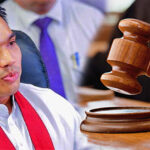
Attorney Anuradha Kiralavella emphasized that action is actively being taken in line with the people’s mandate to expedite the backlog of court cases resulting from the long-standing inefficiency in the administration of justice.
He made these remarks while addressing a press conference held by the ‘Lawyers for People’s Mandate’ (Janavaramaye Nithignayo) in Colombo on the 28th.
Further expressing his views, Attorney Anuradha Kiralavella stated:
“Certain reforms are essential to bring about a transformative era that guides Sri Lanka toward becoming a developed nation. Upon assuming power, the current government began fulfilling its promises one by one. Following the election victory, a principled political journey was initiated without even lighting a single firecracker. In appointing Cabinet and Deputy Ministers, privileges have been significantly curtailed in accordance with the pledges made to the public. Bribery, corruption, and waste were countered right from the start, and luxury vehicles used by former politicians and officials were put up for auction.
The latest addition to these efforts is the introduction of reforms within the judicial sector. Although some claim these amendments are being brought forward in haste, there is absolutely no rush. We are acting strictly according to the mandate given by the people to expedite pending cases hindered by the inefficient judicial process.
Supreme Court Justice Yasantha Kodagoda previously pointed out that if trials for currently pending cases were to begin today, it would take until around 2036 to conclude them. This highlights just how inefficient the country’s judicial system has been. Raising the retirement age of judges is one part of the measures being taken to eliminate these delays. However, critics allege that this amendment is being introduced to target a specific judge. That is entirely incorrect, and there is no such need whatsoever. The retirement age limit is being raised for judges across the entire judicial system.
The only minor concern that could potentially be raised is a temporary delay in promotions for lower court judges. However, after that brief transition period, the two-year service extension benefits everyone upon being elevated to higher courts. Furthermore, while the High Court should ideally have 110 judges, there are currently only around 93 serving. Increasing the bench strength and filling these vacancies in the High Court will create more opportunities for lower court judges to advance, while also opening up avenues to recruit new judges to lower courts. Ultimately, this will grant the public the opportunity to have their cases investigated and concluded swiftly.”